
Business Categories
3D Printing Companies
What can you expect from a 3D printing service? From prototypes and 3D design to small-batch production, this is what UK 3D printing companies offer and how to make the most of them.
3D printing services
A 3D printing company in the UK offers a diverse range of services designed to meet the needs of various industries and individual customers. These services can include:
- Prototyping: rapid prototyping allows businesses to create functional models quickly. This speeds up product development, so designers and engineers can test and refine their ideas before mass production.
- Custom manufacturing: companies can produce bespoke items tailored to specific requirements, from small components to larger products, for sectors such as automotive, aerospace and healthcare.
- 3D scanning: capturing a physical object's dimensions and details to produce a digital 3D model, used for reverse engineering, quality control and improving existing products.
- Additive manufacturing: advanced 3D printing techniques can make parts with complex geometries that traditional methods cannot achieve, reducing material waste and allowing lightweight designs.
- Material supply: a choice of printing materials, including plastics, metals and composites, lets customers pick what best suits the durability and function their project needs.
- Design services: many 3D printing companies help customers create 3D models optimised for printing, including CAD modelling and design revisions.
- Small-batch production: ideal for start-ups and niche markets, producing limited quantities economically without costly tooling or moulds.
- Post-processing: finishing touches such as sanding, painting or assembling printed parts to improve their appearance and function.
- Training and consultation: some companies guide businesses on how to bring 3D printing into their own operations.
- Education and workshops: workshops and educational programmes for schools and institutions that build awareness of the technology.
- Medical applications: custom prosthetics, dental implants and surgical models tailored to individual patients.
Through these varied services, 3D printing companies in the UK play a pivotal role in innovation across many sectors, driving efficiency, creativity and sustainability in manufacturing.
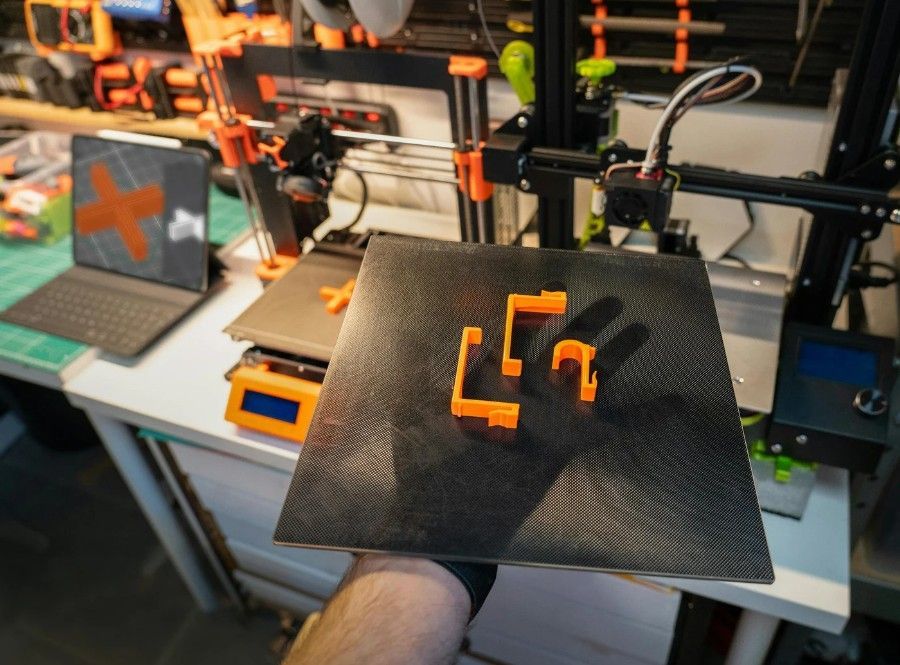
Why more people are using 3D printing
As time passes, we are getting the best out of new technology. Modern inventions give us more convenience in the way we work, and many of the tools now available let us do more for ourselves and finish tasks on time without any hassle. Of course, the latest technology is not always cheap to buy outright.
One of the best examples is 3D printing. A Nottingham 3D printing company, for instance, gives you the chance to turn a digital design into a three-dimensional object, which you can then use to test, recreate or improve other things. Many people now use 3D printing because of the advantages it offers:
Speed
Compared with older methods, parts can be produced far more quickly, which matters when you are in a hurry and only need a limited number of copies.
Cost
There are no moulds or tooling to pay for, so one-off parts and short runs can be made without a large upfront investment.
Consistency
Each part is built from the same digital file, giving consistent results with less material wasted than cutting a part from a solid block.
If you are unsure whether 3D printing suits your project, look at examples and reviews online to see how different the technology is from what came before, or talk to a specialist about what you want to make.
From an idea to a printable file
Almost every 3D printing job starts with a usable 3D file, and many people who need a part do not have one. A design service can create the file from whatever you have: a hand sketch, a 2D drawing, photographs or the broken part itself. The model can then be checked for strength, wall thickness and fit before anything is printed.
In the North West, for example, 3D Printing Manchester offer 3D modelling and CAD design from drawings, photos and worn or broken components, and can work under a non-disclosure agreement where a design needs to stay confidential.
Rapid prototyping services: fast, flexible product development
3D printing and rapid prototyping services have changed the way businesses, designers, engineers and product developers bring ideas to life. Instead of waiting weeks for tooling, machining or traditional manufacturing, a concept can now be turned into a physical model, test part or functional prototype in a fraction of the time. This makes 3D printing a valuable solution for companies that need to develop, test, refine and present products quickly and cost-effectively.
Rapid prototyping is especially useful during the early stages of product development. Whether you are creating a new consumer product, engineering component, architectural model, medical device concept, automotive part or custom fixture, having a physical prototype allows you to assess the design in a practical way. You can check dimensions, test fit, review ergonomics, identify design issues and make improvements before committing to larger-scale production. This reduces risk, saves time and can prevent expensive mistakes later in the process.
Professional 3D printing services are available in a range of materials and finishes, depending on the purpose of the part. Simple concept models may be printed in cost-effective plastics, while functional prototypes may require stronger engineering-grade materials capable of withstanding stress, heat or repeated handling. Common 3D printing processes include FDM, SLA, SLS and resin printing, each offering different advantages in terms of accuracy, strength, surface finish and production speed. Choosing the right process is important, as a display model, mechanical test part and end-use component will all have different requirements.
One of the key benefits of using a specialist 3D printing and rapid prototyping company is access to technical advice. A good provider can help review your CAD file, recommend suitable materials, advise on wall thickness and print orientation, and suggest design changes that may improve the final result. This is particularly helpful for businesses that have an idea or design file but are unsure how best to prepare it for manufacture. Many services can also support reverse engineering, small batch production, product visualisation and design-for-manufacture improvements.
3D printing is also ideal for low-volume and bespoke production. Traditional manufacturing often relies on minimum order quantities, expensive moulds or lengthy setup times. With additive manufacturing, it is possible to produce one-off parts, replacement components, custom brackets, jigs, tooling aids and short production runs without the same upfront cost. This makes it popular with start-ups, inventors, product designers, manufacturers, universities and engineering teams that need flexibility.
Speed is another major advantage. In many cases, a prototype can be produced within days, allowing design teams to move quickly from idea to testing. This faster development cycle supports innovation, improves decision-making and helps businesses present more convincing samples to investors, clients or internal stakeholders. A physical prototype often communicates an idea far better than a drawing or screen-based render alone.
As 3D printing technology continues to improve, the quality, accuracy and material options available are expanding. Modern rapid prototyping services can now produce highly detailed parts with smooth finishes, complex geometries and practical strength characteristics. Designs that would be difficult or costly to manufacture using traditional methods can often be produced more efficiently through additive manufacturing.
Whether you need a single prototype, a design validation model, a functional test part or a small batch of custom components, 3D printing offers a practical and efficient route from concept to completion. By working with an experienced rapid prototyping service, you can reduce development time, improve product quality and make more informed decisions before moving into final production.
From the blog
Presenting an Idea with 3D Printed Models and Prototypes
How physical models help win over clients, investors and planners, and how a presentation model becomes a working prototype.
Read the guide → 3D printingRecreating Legacy Parts with 3D Design and Printing
How an obsolete or broken component can be redrawn from photos and measurements, prototyped and printed as a working replacement.
Read the guide → 3D printingHow to Make the Best Use of 3D Printing Services
If you have never used a 3D printing service, what can you expect, and will it be able to provide the end product you need?
Read the guide →